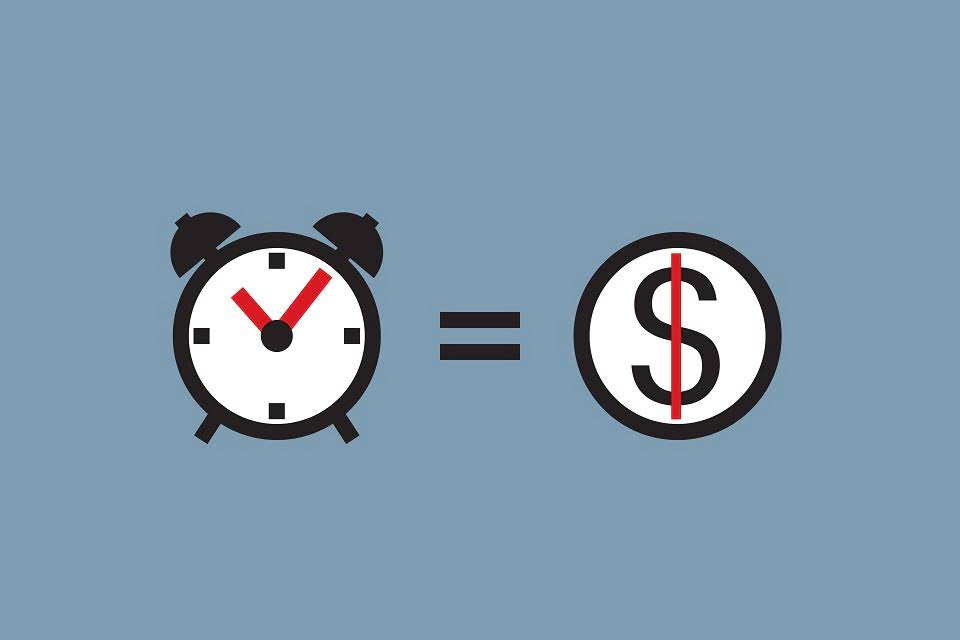


In summary, understanding the opportunity cost of financing options helps companies optimize their capital structure, balancing risk and maximizing returns. Its opportunity cost includes the potential returns current shareholders forgo due to the issuance of new shares. When deciding on capital structure, companies must weigh the opportunity costs of debt versus equity.
Capital structure is the mix of debt and equity financing used by a company to fund its operations and growth. This can include financial gains, market share growth, or other relevant metrics. In contrast, sunk cost refers to money that has already been spent and cannot be recovered, like past expenses on failed projects. Volopay’s advanced analytics tools automatically gather and analyze financial data, while its integration with QuickBooks ensures your numbers are always accurate and up to date. Opportunity cost can be taken into account for forecasting future cash flow but is not rent receipt templates actually included in the cash flow statements. For example, if a $30,000 invoice is due in 60 days, Volopay’s platform ensures you don’t overlook it, helping you maintain steady liquidity and avoid costly cash flow gaps.
Say you have a $30,000 budget—choosing to allocate it to a revenue-generating sales initiative instead of administrative overhead can significantly improve your financial outcomes. This kind of insight leads to consistently smarter decisions. For example, selecting a $50,000 project with a $10,000 higher net present value (NPV) than the alternative ensures your investments are working harder for you. If you could have used that time to work with a client worth $1,500, that’s your opportunity cost.
This requires a comprehensive understanding of the available options. Clearly articulate the decision under consideration. The challenge lies in assigning a measurable value to often intangible benefits. While opportunity cost is a qualitative concept, its practical application demands a quantitative approach. This isn’t simply about explicit monetary costs; it encompasses the implicit value of what could have been achieved with those same resources in a different context. This article provides a detailed exploration of opportunity cost, specifically tailored for a technically-minded audience.
Sometimes, the choice isn’t between mutually exclusive options. Consider using net present value (NPV) for comparing options with different time horizons. Not all costs and benefits can be easily quantified in monetary terms.
In other words, IRR is the “break-even” rate of return for an investment when considering the time value of money. The opportunity cost is the difference between the value of the chosen option and the value of the next best alternative. This calculation suggests that by choosing Option B, the company loses €5,000 in profit that it could have earned with option A. Where the return of the best alternative is the benefit you would have obtained with the discarded option, and that of the chosen alternative is what you actually obtain.
What Is an Example of Opportunity Cost in Investing?
Opportunity cost reflects the possibility that the returns of a chosen investment will be lower than the returns of a forgone investment. Instead, they are opportunity costs, making them synonymous with imputed costs, while explicit costs are considered out-of-pocket expenses. Because opportunity cost is a forward-looking consideration, the actual rate of return (RoR) for both options is unknown at that point, making this evaluation tricky in practice. Opportunity cost represents the desirable benefits someone foregoes by choosing one alternative instead of another. But your opportunity cost in choosing Acme Beauty over Natural Beauty was the $1,000 you missed out on that you would have earned from the latter.
Accounting profit is the net income calculation often stipulated by the generally accepted accounting principles (GAAP) used by most companies in the U.S. This is the amount of money paid out to invest, and it can’t be recouped without selling the stock (and you might not make the full $10,000 back). Buying 1,000 shares of company A at $10 a share, for instance, represents a sunk cost of $10,000. When considering the latter, any sunk costs previously incurred are typically ignored. By contrast, implicit costs are technically not incurred and cannot be measured accurately for accounting purposes.
How to calculate opportunity cost in business?
While opportunity costs can’t be predicted with total certainty, taking them into consideration can lead to better decision making. You need to provide the two inputs of return of the next best alternative not chosen and return of the option chosen. So here, the opportunity cost for Berkshire will be Rs 2500 crore as easily it could have chosen any other listed company with a profit-making company. Frankly speaking, there is no such specifically agreed or defined on a mathematical formula for the calculation of opportunity cost, but there are certain ways to think about those opportunity costs in a mathematical way, and the below formula is one of them. When a business must decide among alternate options, they will choose the one that provides them the greatest return. And if you earn money from those stocks, the opportunity cost of the choice to invest is the money you would have earned if you’d invested in stocks from a different company.
How to calculate opportunity cost for each business decision.
- An example of an implicit cost is the foregone salary of an entrepreneur who is now working in their own business and no longer receives a salary for their job as an employee.Understanding both explicit and implicit costs is crucial for business owners because it can help them decide where to allocate resources.
- Ultimately, base your decision on carefully analyzing the company’s needs, goals, and resources.
- Accounting profit is the net income calculation often stipulated by the generally accepted accounting principles (GAAP) used by most companies in the U.S.
- Frankly speaking, there is no such specifically agreed or defined on a mathematical formula for the calculation of opportunity cost, but there are certain ways to think about those opportunity costs in a mathematical way, and the below formula is one of them.
- The constant opportunity cost for business refers to opportunity cost that remains constant even if the benefits of the opportunity change.
- If an investment’s IRR exceeds the company’s required rate of return (hurdle rate), it is considered a good opportunity.
- For example, selecting one project means losing potential gains from the alternative.
While these costs are indirect, meaning not direct monetary costs that involve a cash outlay, they do impact the total opportunity cost. Opportunity cost helps businesses make more informed, confident investments and keep the team productive. These safeguards can help you make better decisions and avoid costly mistakes, such as investing in projects that don’t yield returns or misusing valuable resources. Once you’ve calculated opportunity cost, you can use various methods to evaluate your results to help your decision-making process. While its limitations can make calculating an opportunity cost more complex, this formula is still a valuable asset when used with other decision-making techniques.
Step 4. Compare the financial impact of each option using the opportunity cost formula
Return on options refers to the profit or loss an investor makes from trading options.When assessing the potential return on options, investors can use several techniques to evaluate risk and potential rewards. That’s the opportunity cost.Risk, on the other hand, focuses on the potential negative outcomes of a chosen option. While explicit costs are more straightforward to track and manage, recording implicit costs may provide a more comprehensive view of a company’s economic performance and help to inform strategic decisions. For example, explicit costs include wages, rent, and the cost of raw materials.Implicit costs, on the other hand, represent the opportunity cost of using resources that are owned by the business. Finance managers typically need both numbers to assess an investment’s value and guide decision-making around resource allocation to maximize economic profit and overall returns. Any investment, even a relatively cautious one likely to generate high returns, carries a degree of risk, and businesses typically prefer to understand their exposure before committing.
Since not every pricing strategy will help every business, opportunity costs evaluate the second-best option and what the company stands to lose by not implementing, overall letting executives make more informed decisions. In the big picture, businesses would prefer positive opportunity costs, where you’d forego a negative return for a positive one, making the decision profitable. While there are many benefits to calculating opportunity costs for making business decisions, especially at the executive level, some limitations exist. Cash flow refers to how much money flows in and out of the business, while opportunity cost represents the potential benefits that are foregone as a result of choosing one option over another.Opportunity cost is an economic concept that is used to evaluate the trade-offs between different options. These costs are not affected by future decisions and should not be considered when making decisions about future actions.When comparing the two, opportunity cost represents the potential benefits of choosing a different course of action, while sunk cost represents costs that have already been incurred and cannot be changed. Opportunity cost can be understood as the ‘positive that could have happened if the other option had been chosen over the choice we made.’ It helps to make informed decisions by considering the potential benefits of alternative choices.
Meanwhile, an opportunity cost refers to potential returns not gained due to not making a particular choice. They are sometimes ignored but are ultimately crucial to making the most lucrative possible decisions. Opportunity cost is the positive opportunities missed out on by choosing a particular alternative (the next-best option). In business terms, risk compares the actual performance of one decision against the projected performance of that same decision.
How to Calculate Opportunity Cost in Your Small Business
This is the key alternative against which the opportunity cost will be calculated. For each alternative, assign a value that represents its expected benefits or returns. Enumerate all feasible alternatives to the chosen option. It necessitates a rigorous evaluation of available alternatives and their respective potential benefits. Opportunity cost isn’t merely about financial outlay; it encapsulates the holistic value – financial, temporal, and intangible – that is sacrificed when choosing one option over another.
- For instance, a decision with a high opportunity cost could also carry a high level of risk.
- This concept covers not only money but also other limited resources such as time and energy.
- This automation reduces human error and saves you time, allowing you to focus on interpreting results and making informed decisions without getting bogged down in manual calculations.
- Individuals also face decisions involving such missed opportunities, even if the stakes are often smaller.
- Cash flow refers to how much money flows in and out of the business, while opportunity cost represents the potential benefits that are foregone as a result of choosing one option over another.Opportunity cost is an economic concept that is used to evaluate the trade-offs between different options.
- Sunk costs are expenses you’ve already incurred and can’t recover.
In this case, the negative result indicates that attending the course is the better decision. Imagine a company must choose between investing in a new product or improving its existing product line. Let’s look at some practical examples to illustrate how opportunity cost works. You could have saved that €100 for your holidays or invested it in an investment fund. The direct cost is €100, but the opportunity cost is the value of the action you gave up for that dinner. Learn how enterprise eCommerce brands are shifting from revenue-obsessed marketing to profit-first strategies
What looks like a great decision in current market conditions may prove very expensive during a downturn, so it’s important to evaluate multiple scenarios. Upgrading could fail to yield the expected return in efficiency required to offset the cost of new equipment. Widgets might opt to expand into a new market and encounter soft demand or regulatory hurdles that eat into profits. The company projects revenue growth of 30% after scaling, which works out to an additional $1.5 million in annual revenue the first year. Issuing shares avoids the cost of debt but means permanently sacrificing 20% of all future profits. If the company opts for debt, it adds $500,000 annually in interest payments, which adds up to $5 million in interest over the ten-year life of the loan.
Optimized decision-making
If that $20,000 is tied up and unavailable for other uses, your opportunity cost is the growth or savings you could have achieved in that time. If you invest $50,000 in new equipment instead of putting it into a stock portfolio with a 10% annual return, your opportunity cost is $5,000. The opportunity cost is the potential innovation or product improvement you forgo by not investing that same amount into research and development.
If you have an opportunity cost of eight and you forego four units, your opportunity cost per unit is two. To find the cost per opportunity, divide the total cost of investment by the number of opportunities created by that investment. Run Rippling Spend with your ERP system and finance data, with the option to integrate natively with over 70 popular HRIS tools, like Workday and Bamboo HR. New training and upgrading each carry an opportunity cost that Alex will need to consider when deciding how to move forward.
But it turns out that if you had instead purchased $5,000 worth of stock from a company called Natural Beauty, you would have made a profit of $3,000 after two years. There’s no single formula that everyone uses for calculating opportunity cost, but there are a couple of common ways to conceptualize it in mathematical terms. Brex is a financial technology company, not a bank. This is particularly important when it comes to your business financing strategy. That said, the opportunity cost formula is still a useful starting point in a variety of scenarios. The expected return on investment for Company A’s stock is 6% over the next year.
声明: 本站内容均转载于互联网,并不代表57创业网立场!
如若本站内容侵犯了原著者的合法权益,可联系我们进行处理! 联系邮箱:214544430@qq.com